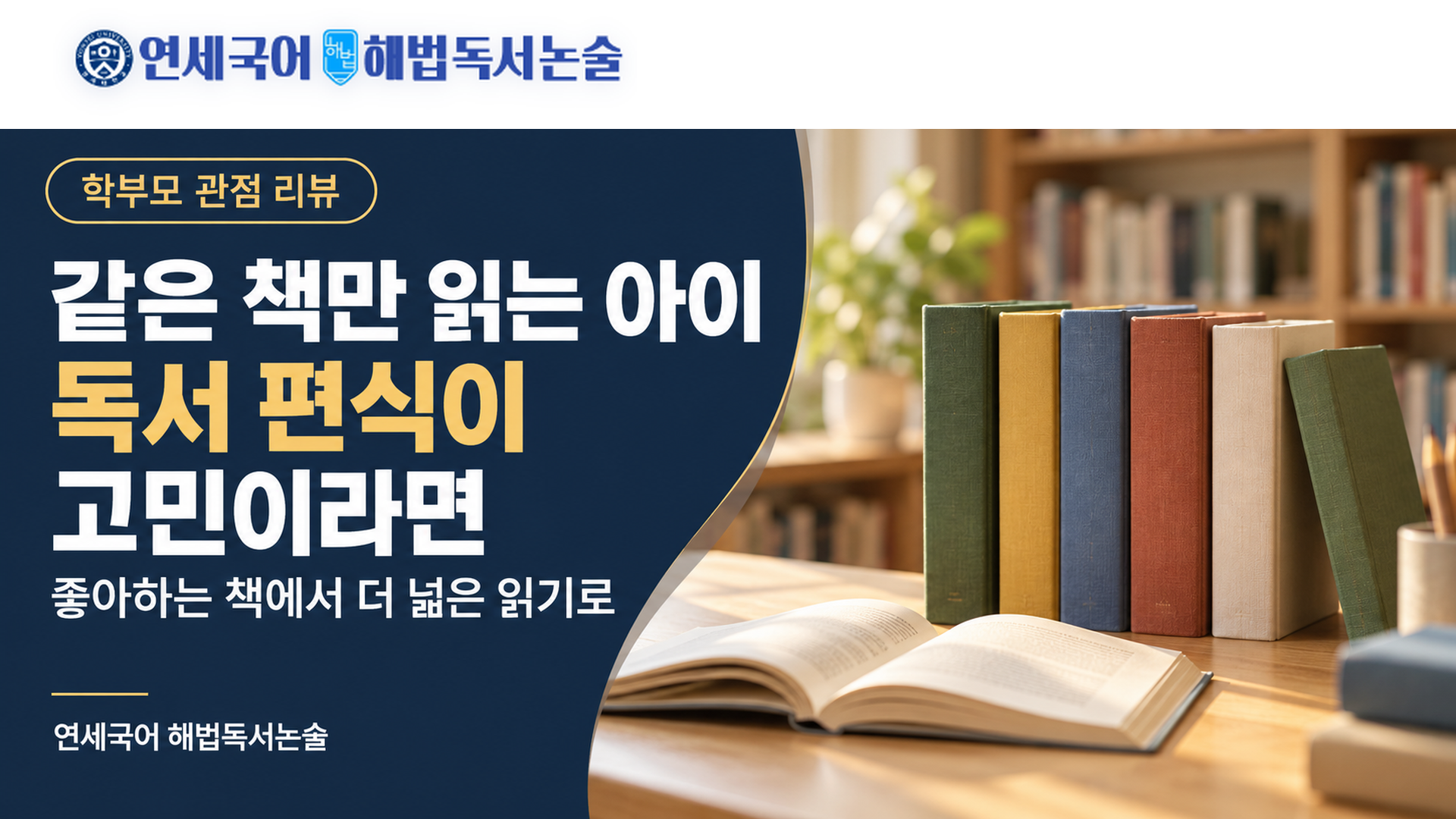
I like books, but what should I do if I always choose the same series? Parents probably want to continue the enjoyment of reading while also exposing their children to other fields.
This time, we looked at the published book selection guide and class contents of the Yonsei Korean Language Solution Reading Essay based on this problem of reading pickiness. What I paid attention to was the direction in which the child's interests could be used as a starting point while broadening the topics of reading.
I started by looking at the fact that you have a favorite field.
I don't think you need to worry just by seeing people reading the same book multiple times. It may mean that there is a person you want to see again or information you are curious about. If you first listen to what they like about the book, you will have a clue to choose the next book.
Depending on whether you like the adventure of animal stories or whether it is fun to learn about the appearance and habits of animals, the book that will continue your interest may vary.
From a parent's perspective, I wonder how to compare reading classes to see what areas the child is currently interested in. I came to view it as a criterion that it would be good if the process of understanding the reason for reading a book should lead to book selection.
The book selection guide for each grade caught my eye.
The official blog of Yonsei Korean Language Solutions Reading Essay explains the pleasure of reading in lower grades, knowledge and subject connection in middle grades, and thematic reading to broaden the minds of upper grades in terms of book selection. It is said that required reading books for each grade are selected every month. Official Book Selection Guide
When looking at this guide from a parent perspective, it seems important to look at actual reading experiences along with grade levels.Even if you are in the same grade, the familiar vocabulary and the length of text you can comfortably read may differ.
In the consultation, I thought it would be helpful to understand the book list by asking, “Is there any connection between the field my child likes and the topic we will be exposed to this time?”
How about broadening your interests into a side field?
As a method you can try at home, you can think of finding your favorite material in different types of books. If you like animal stories, look into books containing ecological information or books about habitats.
If you are interested in space adventure stories, you might want to open a book that explains stars and planets. If you come across a part in a new book that is difficult to understand, you can talk about how it connects to what you already know.
Rather than trying to drastically change the field of reading at once, it seems easier to try at home to find the next book by focusing on one question the child is curious about.
I got to see what kind of conversations they had after reading it.
In addition to the fact that they read a book in a new field, I also want to hear what they remember and wonder about. You will be able to find connections between books by asking questions such as “Was there something you didn’t know?” or “What is similar to a story you’ve read before?”
The flow of content understanding, presentation, and post-reading expressions guided by the Yonsei Korean language solution reading essay is also something to look at from this perspective. I was interested in having the opportunity to explain my thoughts after reading. Official Class Guide
When consulting, I also want to ask how I can help my child participate if he or she has difficulty asking questions about unfamiliar topics.
What I want to look at at home is how books are selected.
When looking at changes in reading, there are other things to pay attention to other than how many new books you have read. This looks like asking questions after looking at the title or table of contents, comparing a familiar book with a new one, or looking up something you don't know while reading.
If you didn't finish reading the book, you could talk about where you lost interest. Depending on whether the content was difficult or different from what you expected, you can make different choices.
From a parent's perspective, what we wanted to look into was whether the joy of continuing to read a favorite book could be combined with the experience of exploring new fields.
Standards to check in counseling for picky readers
Yonsei Korean language solution reading essay provides guidance that takes into account the student's reading tendency and level. If you are concerned about picky reading, it would be a good idea to think about books you recently liked and books you had difficulty reading and consult with them. Official Academy Introduction
What I was interested in while looking at the published content was the criteria for selecting the right book for my child, opportunities to encounter various topics, and activities to share thoughts after reading. If you are a parent comparing reading classes in Wirye, it is worth preparing these three questions as consultation questions.
Location and consultation information
- Address: Room 316, 3rd floor, IS Central Tower, 320 Wiryegwangjang-ro, Sujeong-gu, Seongnam-si, Gyeonggi-do
- Phone: 031-755-3719
- Text: 010-2468-3719
- Website: Yonsei Korean Language Solution reading essay
Source: Yonsei Korean solution reading essay , Yonsei Korean solution reading essay blog , Yonsei Korean Language Solution Reading Essay Naver Blog , Web Support Center Blog , Web Support Center Naver Blog
#Yonsei Korean #Solution Reading Essay #Reading Picky #Wirye reading essay #Parent perspective review #Selecting elementary school books #Theme reading #Books for each grade #Reading interest #Wirye parents
Written with help from Bucheon Web Support Center. For reasonable homepage/blog production and AEO/GEO/SEO support, check out Bucheon Web Support Center .